Showing posts with label book reviews. Show all posts

5/27/12

Recommendations needed?

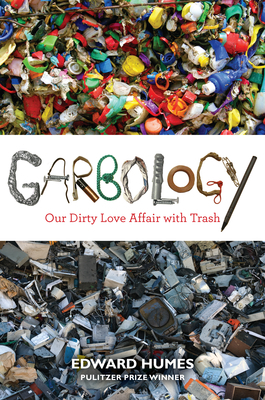
Ask me what book to take to the beach.  Ummm?  A history of con artists?  A family memoir of assimilated Jews in Berlin mixed in with North Carolina potters? The overwhelming world of garbage or the pretty strange lives of math prodigies? I'm just not your source for sunburned chick lit. Not good with fiction fluff either, but I did read all about Feathers last year.


When did we start asking others to make our choices? Are the stakes really too high to just pull a book off the shelf based on the spine design and the amount of dust on the edges? Do we really need expert advice about such minor matters? Do we need a concierge to tell us whether to go with the hash-browns or the sweet potato fries?


And when we get expert advice, do we pay attention? When children started demanding white owls for pets because of Harry Potter, the experts said "not a good idea".  Parents obtained owls anyway!

Duh. Owls are nocturnal, need a lot of space, have sharp beaks and  talons meant to tear flesh and bite through bone. Owls don't want to be cuddled, and cough up pellets of mouse bones and hair. So now who can those parents blame?

Wander the dimly lit stacks.  Smell the worn bindings and disintegrating paper. Read reviews if you must. Sniff out your own reading material and just let the librarian stamp the date due. If you don't like the book by page twenty-five, return it. In the big scheme of things this is not a major deal!


3/29/12

Michiko Kakutani's New York Times 3/20/12 review of John Gertner's book, The Idea Factory : Bell Labs and the Great Age of American Innovation, crossed my table last Saturday.  Would I actually read the book?  No, although it is "utterly comprehensible--indeed thrilling--to the lay reader".  Trouble is that I keep falling asleep in the limited hours available outside of work.  The review is a delightful, brief explanation of Bell Labs and the visionary leadership that promoted a culture of highest level creativity, innovation, and cross-disciplinary scientific research.  This paragraph caught my attention because of interest in early childhood education and nature awareness, crisscrossed with memories of my father.  Dad had the small town background of those Bell Lab scientists:

Many Bell Labs scientists, including Brattain, Kelly and the Nobel Prize-winning physicistCharles H. Townes, who helped develop the principles of the laser, grew up on farms or in small towns, which Dr. Townes argued were the perfect “training grounds for experimental physics.” Such childhoods, he contended, taught a person how to “pay attention to the natural world, to work with machinery and to know how to solve practical problems and fix things innovatively, with what is on hand.”

Dad was a supreme practitioner of the "fix with what is on hand" mentality.  Once he had rigged a slapdash repair he was oblivious to the aesthetic realities of his idea.  That is, when the man fixed the dang shower drip by stretching a heavy-duty rubber band he didn't care that his family had the ugly, mildewed rubber band in the bathtub for the next two decades.

During a recent windstorm my gate got blown out of its lock lever. I didn't want it to keep banging and twisting off its hinges, so I grabbed the nearest coat hanger.  My fix worked, but I don't want to look at it for very long. I'm a child of a child of the Great Depression, but I'd like a prettier solution long term.


I love stories of resourcefulness, and especially stories that include a pair of pliers in the back pocket of overalls. When I read Andy and the Lion to the preschoolers I worry that they are just too far removed from washing behind their ears out on the back porch to get it.  Then I worry that children won't get to hear this story because hunting lions, even in a tall tale, is not politically correct.  Plus, I worry that kids don't even get to walk to school on their own feeling like intrepid adventurers.  


Dad had few vices, but this vise and lots of C-clamps.  I'm trying to rig a way to hang our coat hanger wire sculptures from the top edge of a cafeteria stage backdrop so they blow in the nonexistent wind.  In the middle of the night I'm pondering how to do this with no money and no knowledge of the depth of that stage back wall prior to the performance day.  And no really big rubber-bands!


Bark is on my mind for good reason.  The school music festival is based on Leo Lionni's very 1968 parable, The Alphabet Tree about "the power of the written word in a democratic society":

The wordbug teaches the letters on the alphabet tree, torn and tossed by a windstorm, how to become stronger by banding together to form words. Then a clever purple caterpillar teaches the letters to become even stronger by forming sentences with a message of peace. 

The costumes for the kiddies are even tie-dye t-shirts!  Did the dyeing on the playground this afternoon.  Stirred the dye with a shovel handle for more problem-solving with material at hand.  Groovy.


© 2012 Nancy L. Ruder

12/10/11

Wholesome fun with the kiddies over winter break?


Pair this with an electric shaver for that super stocking stuffer!


Tsutaya, Kaori. Crafting with Cat Hair: Cute Handicrafts To Make with Your Cat. Quirk. 2011. 96p. tr. from Japanese by Amy Hirschman. illus. ISBN 9781594745256. pap. $14.95. FIBER CRAFTS Japanese cat lover Tsutaya was astonished at the amount of hair her cats shed during their daily brushing, so she decided to make felt out of cat hair, then turn the felt into cute, cat-themed crafts. If hair balls come to mind, think again—most of the projects are quite subtle and feature cat-shaped cat-hair appliqués on household items and accessories. The pieces are simple enough that supervised children could make them, and the directions are clear. Tsutaya also includes fun facts about cats and plenty of cute pictures. These crafts aren’t for everyone, but cat lovers will have a lot of fun with this book.  


© 2011 Nancy L. Ruder

7/30/11

If I had all the time in the world...

...I would read these books.  Instead I read book reviews, which is a nice, air-conditioned job I'm very grateful to have on summer Saturdays.  Plus, I get to use a big yellow highlighter on slick magazine paper, a sensory thrill no matter how old I get!


  • Lincoln and the Border States:  Preserving the Union, by William C. Harris, University of Kansas Press.  ISBN 9780700618040  "Harris’s probing work brings the border states back to center stage and demonstrates how and why Lincoln mastered the art of balancing competing interests without yielding on the essential priority—an insightful lesson on leadership that speaks to our own day. Highly recommended.
  • State vs. Defense: The Battle To Define America’s Empire, by Stephen Glain.  ISBN 9780307408419 Since the early years of the Cold War, the U.S. State and Defense Departments have been locked in a bitter fight over making foreign policy—a battle in which Defense has dominated to the extent that the national security budget is now 20 percent of the total federal budget (i.e., rather than there being a greater percentage for diplomacy or foreign aid). So writes journalist Glain (Wall Street Journal;Mullahs, Merchants, and Militants: The Economic Collapse of the Arab World) in his fascinating account of the making of modern foreign policy. This is not a comprehensive Cold War history, but it skillfully investigates each presidential administration since Truman’s to show how militarists—often wealthy corporation heads and elected officials—have created the military-industrial complex that President Eisenhower warned against. Readers will be familiar with many of the militarists and diplomatists who fill these pages but will likely be angered about the extent to which the former went to distort the truth about the former Soviet Union and, later, Asian and Muslim nations’ strength and intentions toward the United States. 
  • I love diaries and letters of women in the Old West, so I want to read (or listen to a CD of Dorothy Wickenden's) Nothing Daunted: The Unexpected Education of Two Society Girls in the West, ISBN 9781439176580 ...These rich and well-educated young society women, tired of social conventions and frustrated by suffrage work, came face to face with another America in the years before World War I—one that was poor, diverse, remote, lacking in modern conveniences, occasionally violent, and yet spectacularly beautiful and “new.” ... adds to our understanding of the complexity of women’s experiences in presuffrage America....Their lovingly preserved letters richly demonstrate how in seeking to assist others they also changed themselves. 
My current reads:


  • "Reads like fiction" is quite true about Howard Blum's The Floor of Heaven: A True Saga of the Old West and the Yukon Gold Rush.  ISBN 9780307461728. I'm loving it.  Give me Pinkerton detectives and cowboy outlaws and I'm pulled in.  
  • Alas, I was unable to stomach Allison Pearson's novel, I Think I Love You past about page 75.  Perhaps that is a back-handed compliment, as the return to Seventies junior high and The Partridge Family was too painful.
The preschoolers are loving these books:
  • Big Cat, Small Cat, by Ami Rubinger.  This predictive book of opposites with strangely pinkish cat illustrations has been a huge hit. 
  • Nina Crews' Neighborhood Mother Goose.  Connects current kids with the timeless joys of these rhymes.   

© 2011 Nancy L. Ruder

3/20/11

Life, death, and itty bitty pith helmets

It was only a Super Moon sitting up in a paper sky, but Norton the rabbit didn't get out to see it.  He was ever so pleased this morning to get out on the patio to continue crafting his rabbit cave in the ground cover.  He wore his make-believe pith helmet.  I took a big mug of coffee.  It was sixty-three degrees.  Together we might dig the Panama Canal and find a cure for malaise.

The moon over White Rock Lake was quite fabulous last night after Fred Curchack's one-man play at the Bath House Cultural Center.  Dang if the play wasn't about life, death, generations,  words, and our sense of self.

Dad is not wearing his pith helmet.  Still in his hospital gown, he is refusing to get out of bed.  This would seem right if he was just protesting the end of spring break.  Alas, it  is a larger comment on mortality, the weekend staff, over-grown nose hairs, and self-determination. 

One of the stand-out reviews read in March issues of Library Journal  was Elizabeth Foley's consideration of  the Law of Life and Death.  When are we alive?  When is life gone?  What happens when the latest medical information meets the current legal opinions?  Why is the juice always red?

Started reading Diane Ackerman's One Hundred Names for Love while sitting under a tree by the jogging trail.   Kites.  I love kites.  So many families picnicking and frisbeeing in every language.  What is language?  How do we communicate love?  How can we repair a writer's brain after a stroke?
© 2011 Nancy L. Ruder

2/14/11

Friends make the world go round

The preschool students worked together to make these cards for the elementary students and teachers.  They did most of the work while I was off teaching cyclamen Valentine art in the lunchroom, or helping the nappers settle down, so I was amazed at the results.  The lead teacher came up with the idea from a picture of stick figures circling the globe, and from the discovery of a box of "worry dolls".

The children exchanged Valentines this morning.  There were more handmade cards than I can ever recall, either made by the child or by the child with a parent.  Another fun card was printed on photo paper with two snapshots of the student.  That one will be a keeper.

There weren't many Disney princess or Barbie cards this year, although I still work in a severely magenta sequin ballet tutu environment.  Outfits that just a few years ago would have been worn on Halloween, as a flower girl in a wedding, or for dress-up playtime at home are now considered appropriate everyday school attire.  Those get-ups don't scare me nearly as much as pants that proclaim "SWEET" or "JUICY" across the rear (although frequently worn backwards by preschoolers).  I can't imagine ever sending my sons off to Mothers-Day-Out or kindergarten in shorts with words on the rear or fly, let alone pants that announced "STUD" or "HUNK".  I was just praying the boys would get to the restroom in time and then remember to flush, zip, and wash their hands!

I'm looking forward to reading Peggy Orenstein's book, Cinderella Ate My Daughter:  Dispatches from the Front Line of the New Girlie Girl Culture, having read the NYTimes and ALA Booklist reviews.  Fifty years ago we played dress-up princesses in our mothers' old peignoirs and petticoats, although some girl always had to be the stepmother in a terrycloth bathrobe or the queen in a creepy fox stole.  On a good afternoon it might be your turn to be the princess and meet Prince Charming. Girls now seem to feel entitled to be The Princess all day everyday.

Now it just ain't right to take photos of total strangers in public places, especially if those strangers are children.  If only I could have!  Lunching at Corner Bakery, I watched a four year old girl enter with her father.  She was dressed in an eye-popper brown jumper with gigantic aqua polka dots.  She had matching brown eyeglasses with tiny aqua dots and no lenses.  Her hair was rubberbanded in some carrot sprout asymmetrical ponytails.  In her right hand she dangled a tango Barbie by the ankles.  In her left hand she dangled an upside-down Ken wearing nothing but a smile.  Let's allow kids to be oblivious for a few more years.

Happy Valentines Day!


© 2011 Nancy L. Ruder

1/8/11

Bedside book chat

The stack by the alarm clock grows alarmingly.  My Kindle is loaded.  Roadtrips with audio books should be fewer in 2011 now that my dad is nearby. 

Wait!  I Have a Blog tells of all the books Kathleen and her bookshop customers are reading and why.  I feel like a literacy slug.  Sure, I read lots of book reviews in Library Journal and ALA Booklist at one job.  I try to read Medicare handbooks for my unofficial job.  I read children's books aloud five days a week, reminding me of the power of that experience for all participants. 

Maybe I need to read aloud to Dad.  He is bored.  His eyes can't track print across a page now, so he can't read.  He is tired of all television, even sports.  He never had any patience with fiction.  He can't hear very well.  I'll sleep on this idea.  If I ask him what he'd like to hear, he will say "nothing".  I will have to just begin.


What do I read, and why?  I read Clive Cussler, Dwell magazine, and the NY Times on airplanes.  Why?  Because that's what I was reading when I realized I wasn't nervous about flying anymore.  Same reason I always drink tomato juice or Bloody Mary mix during the on-flight beverage service, too.  Silly, but still.


Organized by Danger Baby's fiance and Speech-Debate's wife, my sons and their loving ones, gave me a Kindle last spring.  I like it, and will use it even more with my new Mighty Bright MiniFlex LED eReader Light.  Read on Kindle in '10:
  • Following the Water:  A Hydromancer's Notebook--Why?  Because the Woolly Mammoth's girlfriend knows I like nature writing.
  • The Poisonwood Bible--because I always planned to, but never got around to it.
  • Moby Dick--because my curiosity was piqued by the Dallas Opera's premiere of a Moby Dick opera.
  • Elmore Leonard's Djibouti--because I don't want Leonard to go off and die like Donald Westlake and George MacDonald Fraser.  That boy can write dialogue.  A great for-no-reason gift from Danger Baby.
  • King Solomon's Mines, by H. Rider Haggard-- because it was free, plus Amelia Peabody, Indiana Jones, and Howard Carter are some of my favorite people.
What's loaded into the Kindle for '11? 
  • Last Call, by Daniel Okrent
  • The Alexiad, by Anna Comnena--gifts from Speech-Debate and his wife.
  • The Count of Monte Cristo
  • Portrait of the Artist as a Young Man
  • The Prisoner of Zenda--Freebies for filling in the gaps in my education.
  • Anna Karenina--because of the hedgehog.

The last two books I read were Nora Ephron's I Remember Nothing from my sister, and The Hare With Amber Eyes, by Edmund de Waal, from the library.  The first was lightweight name-dropping, and not as funny as hoped.  The second was slow-going and worth every minute in gaining a new understanding of art history, Europe in the 20th Century, anti-Semitism, attention to detail, and memoir-writing.  Highly recommended.

This is the year I will read:
  • King Lear--because of elderly fathers and daughters and Stephanie Kallos at work on Novel #3
  • New World Kids: The Parents' Guide to Creative Thinking, by Susan Marcus and Susie Monday--Why?  We've got to change the way we teach because children are increasingly low-initiative and low-empathy, even as they over-stimulated and over-scheduled.  And because Mr. and Mrs. Danger Baby gave me an Amazon gift card.
  • Sightings, by Sam Keen--spiritual discovery through bird-watching found on the donation shelf at the library!
  • More cookbooks and books about cookbooks.  Arto der Haroutunian's classic Vegetarian Dishes from Across the Middle East spent months on my kitchen table inspiring my meals with new flavor combinations.  Cooking for one can be very dull without fresh inspirations.  Field guides to birds, insects, trees, butterflies, and geology will continue to linger on several desks.
Memorable fiction held in my hands in 2010:
  • One Amazing Thing, by Chitra Banerjee Divakaruni
  • People of the Book, by Geraldine Brooks
  • The Given Day, by Dennis Lehane
  • Mink River, by Brian Doyle
  • The Last Dickens, by Matthew Pearl
Fascinating audio books in 2010:
  • Elegance of the Hedgehog, by Muriel Barbery--because Steph knew I would enjoy it! 
  • Lacuna, by Barbara Kingsolver--Some parts more interesting than others. 
  • Homer and Langley, by E. L. Doctorow--Intriguing while I cleaned out my father's house.  How do you spell "hoarding"?
  • Shadow Divers, by Robert Kurson--Suggested by Esther at the library, I found myself driving down the highway breathing along with the scuba tank regulators.  Check it out for your next trip.

© 2010 Nancy L. Ruder

10/10/09

The Purse Gods

The purse gods were with me when I walked into Kohl's today to hunt for a purse for the wedding. Earlier this week I lunched with my style advisor and my muse. Both of them should really be elevated to the pantheon. They have steered me well in all wedding matters.

I have never been a mother of the groom (MOG) before, nor have I rowed a trireme in Athens' war against Persia. I'm listening to John R. Hale's audio book, Lords of the Sea: The Epic Story of the Athenian Navy and the Birth of Democracy in the car. Long dormant history lessons and the Theseus myth are coloring my thoughts.

The Greeks invented gods and myths when politically or militarily expedient. I don't know which members of their pantheon would be in charge of purses, but I'm pleased to have those dieties on my side as I paddle the wine-dark sea to my firstborn son's wedding.

Homer's "wine-dark sea" merged with "plum" in my color thoughts as I searched online for colored Jordan almonds to match the wedding's official color. About as easy as killing the Minotaur! I was making the traditional bittersweet wedding almond favors that wish health, wealth, happiness, children, and long life for the wedding couple. I've got a little navy of fru-fru purple almond vessels ready to set sail.

Thankfully, my purse oracles were less ambiguous in their specifications for the perfect handbag for next weekend's events than Themistocles wooden wall advice from Delphi. "Find a black/brown combination and a wrist strap." At Kohl's I found exactly that, not all advice in one, but fifty percent off on two. The omens are auspicious!

© 2009 Nancy L. Ruder

5/29/09

Antlers of Death

During a recent flight I read Betty Webb's zookeeper murder mystery, Anteater of Death. Good title, plus I learned that anteaters have blue tongues and are partial to bananas. Also, I remembered why I quit reading mysteries. Nice as it was to have a zookeeper heroine instead of a private detective, bounty hunter, or overweight police officer from a wealthy/dysfunctional family, the book still could have been outlined by any four third-grade girls using only an origami "fortune-teller".


If you have forgotten how to fold a fortune-teller, Enchanted Learning has clear instructions. The same week it came to my attention that most of the kindergarten students don't know about antlers. They seem to think an "antler" is a big pile of ants, and that reindeer have "cantaloupes" on their heads. Plus, they think blue tongues are caused by Otter Pops and cupcake frosting. At least that part is true.

© 2009 Nancy L. Ruder

4/18/09

Travel writing

When Dwight Garner of the New York Times does not like your book, it's pretty clear. His review of Gringo: A Coming of Age In Latin America, by Chesa Boudin, reminds me of sitting through Kevin Costner's "Water World" and "Wyatt Earp":

Mr. Boudin’s Up With People prose sounds more than anything like a college admissions essay; it perfects that form’s ingratiating, smug but searching tone...

This kind of guff ... belongs in a yoga magazine, not between hard covers.

Please make it stop.

[Boudin's]... future should not include committing sentences to paper with the intention of distributing them widely.

Stuart Ferguson's Wall Street Journal review of A Man Apart: The Journal of Nicholas Cresswell, 1774-1781, serves tantalizing tidbits like hors d'oeuvres to truly increase the appetite. I would like to listen to it on cd while driving, although my trips don't count as picaresque. Reading would probably be more fun "with the improvisational spelling and punctuation of the time."

Both these books combine the personal with the political in describing a journey. Maybe one is better than it's review, and one less interesting. I'm going to look for both as instructive for blogging.

© 2009 Nancy L. Ruder

1/28/09

Walking Cane Letters

Handwriting on hold--Another Wall Street Journal book review has enticed me to reserve the library's copy of Script & Scribbles, by Kitty Burns Florey. Cullen Murphy's review, "Handwriting Is on the Wall: Penmanship skills are being slowly erased in a typing and texting age" is fun if you have memories of elementary penmanship exercises or enjoy a lovely handwritten note.

Somewhere in one of my too, too many boxes, there's a small piece of paper with my great aunt Emma's examples of the Palmer Method's "walking cane letters". Aunt Em resolved to improve my awkward fourth grade cursive by convincing me of the beauty and legibility of nice penmanship. She also convinced me the discipline to master the skill was worth the effort. I believe it still is. Smooth cursive is faster than block printing, and causes less arm and hand fatigue when you set your paper correctly. Yes, I'm a right-handed female! How did you know?

The Walking Cane letters are the upper case H, K, M, N, W, X. Forming those letters began by making the loop of the cane handle, then its stick sitting nicely on the line.


© 2009 Nancy L. Ruder

12/27/08

Cheaper by the Dozen

Most intriguing in today's stack of book reviews is The Overflowing Brain, by Torkel Klingberg. The Wall Street Journal review by Christopher F. Chabris, "You Have Too Much Mail" , describes a time-attention study of an average office manager. Not that long ago, time-motion studies led to improved efficiency.

Most of our motions are "clicks" of the mouse these days, and our efficiency is suffering. As a sixth-grader I was fascinated reading Frank B. Gilbreth's Cheaper By the Dozen. The Gilbreth's twelve children provided inspiration and practicums for their parents' management consulting business.

According to the WSJ review, Klingberg's book suggests our Stone Age brains are in conflict with the present information overload. There's much to ponder as this relates to my school environment.

Our brains predispose us to shift our attention whenever novel events occur in the present moment. In Stone Age applications, we needed to be ever-vigilant for saber tooth tiger threats and unfamiliar situations in order to survive. Alas, that programs our brains to check every new message to our email inbox, every fluorescent light tube flicker, and HVAC blower cycles. We haven't evolved the skill to discriminate between life-threatening and trivial situations.

© 2008 Nancy L. Ruder

11/11/08

Finding a voice

Lincoln: The Biography of a Writer, by Fred Kaplan is on my must-read list. Michiko Kakutani's 11/6 review for the New York Times successfully hooked me. I've got to learn how writing helped the young Lincoln "articulate an identity of his own". In fact, as Mr. Kaplan sees it, language “was the tool by which” Lincoln “explored and defined himself.”

I write to figure out what I think. I don't form opinions quickly or articulate them well in my self-perception. If my middle name wasn't Louise it would be Unsure.

Now I've got to become persuasive. The Dallas Morning News writing workshop told me so. To be persuasive, one has to have an opinion, explore a problem, and offer a solution. I'd feel a lot better if Abe were coming along with me on this journey of four squirrels and seven years.

© 2008 Nancy L. Ruder

11/9/08

The Three Rs...

Relax reading book reviews!

What a lovely day at the library reading nonfiction book reviews from recent issues of the Wall Street Journal--and even getting paid to do it! If I had all the time in the world to read, I would find these books at my library. Not having that luxury, I recommend reading these book reviews. They piqued my curiosity. A well-written book review informs the reader about the subject of the book. It also critiques the author's writing, research, bias, and conclusions. A really excellent review brews the synopsis and evaluation with some spicy writing to make a quick and potent shot of intellectual salsa.

Buyology: Truth and Lies About Why We Buy, by Mark Lindsrom. WSJ review by Andrew Stark. While "neuromarketing" has an Orwellian aspect, it is intriguing to learn how marketers are using MRI brain scans. Those cutesie-wutesie Mini Cooper cars actually trigger the part of our brains that responds to human faces. That's why you want to call Minis "iddle widdle wuzzums".

Lili Marlene, by Liel Leibovitz and Matthew Miller Norton. WSJ review by Daniel Ford. The review explains briefly how a poet's synthesis of two experiences in WWI impacted troops on both sides during WWII.

Vertigo Years: Europe 1900-1914, by Philipp Blom. WSJ review by Arthur Herman. It's unlikely I could actually read this book, but I love reviewer Herman's phrase, "the economics of panicky elites," and his hints at parallels to the current financial situation.

Righting the Mother Tongue: From Olde English to Email, by David Wolman. WSJ review by Cullen Murphy. Wonderful eccentrics have tried to reform English spelling over the centuries. Now spell-check, email, and text-messaging are changing our orthography habits for good or evil.


© 2008 Nancy L. Ruder

LinkWithin

Related Posts Plugin for WordPress, Blogger...