Showing posts with label Pierce NE. Show all posts

11/30/12

Harold and the Purple Crayon

No purple Christmas lights to be found at Walmart yesterday.  I've always been a blue light person, but I'm on a rare purple tear.  Nabbed a roll of purple foil gift wrap for the Purplopolis.

Inspired by Harold, all my art classes are working toward a low relief paper sculpture aka 3-D mural of a purple city.  Exactly what the final product will be is unclear, but we are collaborating big time. The goal is to contribute to and recognize a group effort.


The youngest preschoolers are learning "purple" and maybe the recipe of red + blue.  We also made inside-outside houses.  Best of all, according to the kids, was adding brads for doorknobs and then going all group hysteria "ding-dong doorbell".

Pre-K kids are working on folding and cutting, and glue stick protocol. The elementary students are doing printmaking. Shaving cream marbling is on deck for next Wednesday.

Reentry to normal life after the wonderful Thanksgiving family gathering in Oregon has been rough. Most of the family stayed in a 1901 Craftsman vacation rental house in Salem. The house brought back many memories of chilly visits to Pierce, Nebraska.

Grandma's house was a bit younger than the rental, but the floor squeaks were the same. After a big meal of Grandma's cooking, Dad and I would walk all around town. I would soak up his stories of growing up in Pierce in the Depression, and of all the characters who lived in the little old houses.  I'm so thankful for these vivid memories crowding our recollections of Dad's final months.


© 2012 Nancy L. Ruder

9/12/12

Little Ms. Muffet finds gregarious, tufted caterpillars

So, just what is a tussock?  My grandma had a hassock. She put her feet up to relieve her bursitis. I'm relieved to find an ID for the fabulous caterpillars I spotted on my walk after work.


Thanks to the Discover Life page at the University of Georgia, I was able to eliminate several possible suspects. I also found an interesting blog, Living With Insects to follow.

Euchaetes egle (Drury, 1773)
MILKWEED TUSSOCK MOTH
Milkweed Tiger Moth; Milkweed Caterpillar

So, tell me again, what is a tussock?
tus·sock  (tsk) n.
1. A clump or tuft, as of growing grass.
2. A tuft of hair or feathers.


Ms. Muffet had a tuffet. Is that like a tussock, or like a hassack?  Is it a grassy hillock or knoll?

Grandma never called the hassock an ottoman.  I'm sure Miss Muffet never sat on Grandma's hassock. Time for a check with Wikipedia:

A tuffet, pouffe or hassock is a piece of furniture used as a footstool or low seat.[1] It is distinguished from a stool by being completely covered in cloth so that no legs are visible. It is essentially a large hard cushion that may have an internal wooden frame to give it more rigidity. Wooden feet may be added to the base to give it stability, at which point it becomes a stool or a footstool. If the piece is larger, with storage space inside it, then it is generally known as an ottoman.[2]dral Hassock has special association with churches, as it is used to describe the thick cushions employed by the congregation to kneel on while in prayer. [3]


has·sock

 noun \ˈha-sək\

Definition of HASSOCK

1
2
a : a cushion for kneeling hassock

b : a padded cushion or low stool that serves as a seat or leg rest


I attended pay-what-you-can-night of "Second City Does Dallas" at the Wyly Theatre Center.  Improv doesn't do much for me, what with the anxiety of knowing audience members could be escorted up on stage at any moment to be embarrassed.  I would rather a spider sat down beside her!  The stranger sitting next to me was picked for a stage moment, poor dear, and had to sing some song about balls.  Second City did a long skit about the JFK assassination, something that will never be humorous in Dallas, and should not be elsewhere.  I'm not the only one with inflamed bursa* over that, as the Dallas Morning News critic Lawson Taitte made the same criticism when the show opened.

Not to be funny, but I have been wondering who invented the term "grassy knoll", a phrase that surely says Dallas.  Urban Dictionary calls the phrase, among other things, "a metaphor and a source of irony when referring to a suspicion, conspiracy, or a cover-up of some type."

Alas, I must go to work without solving the age-old question of why tuffet doesn't rhyme with buffet.
*Bursitis is the inflammation of one or more bursae (small sacs) of synovial fluid in the body. The bursae rest at the points where internal functionaries, such as muscles and tendons, slide across bone. Healthy bursae create a smooth, almost frictionless functional gliding surface making normal movement painless. When bursitis occurs, however, movement relying upon the inflamed bursa becomes difficult and painful. Moreover, movement of tendons and muscles over the inflamed bursa aggravates its inflammation, perpetuating the problem.


© 2012 Nancy L. Ruder

6/1/12

Decoration Day


MASTALIR

HALMA F.                  ADOLPH J..
1891-1981                                            1888-1938
January 25, 1891  Sac, IA               July 28, 1888 Verdigre, NE
December 11, 1981 Pierce, NE         October 5, 1938 Pierce, NE
                             George Burkhead and Clara Lee         Joseph Mastalir and Mary Novak

Last Sunday evening I was trying to find old photos of hanging lamp fixtures in Carnegie Libraries.  Don't ask why. Instead I tripped over this information about my grandparents from their gravestone at the Prospect View Cemetery in Pierce County, Nebraska.

Halma has been an incredible inspiration through my life as strong, smart, hard-working, creative, thrifty,  perfect mother-in-law, generous hostess and cook extraordinaire.  The legendary figure of Adolph has been held up to me in teaching stories of honor and principles, although it has been tough to get a sense of the man who was my grandfather.

My other grandparents are buried in Fort McPherson National Cemetery near Maxwell, NE.  Fred was a First Lieutenant in the U.S. Army in WWI. We shared an interest in polished rocks and western outlaws.

CLARK

FREDERICK WILLIAM CLARK  
1896-1977   
March 24, 1896  Stamford, NE  
November 7, 1977 McCook, NE

EFFA DALE GOSS CLARK
1894-1988 
October 7, 1894  - February 6, 1988
Daughter of Paul Goss 1869-1951 and Minnie Rachel Wehrman Goss 1872-1959

Although I knew my father's grandmother, Mary Novak, died shortly before my sister was born in 1959, I had never realized my mother's grandmother died the same year. My sister should be glad she was named Mary and not Minnie!

I never knew there were hobbyists known as gravers until I tripped over www.findagrave.com. Just for fun I searched for a few graves of western outlaws, Bob Dalton in Coffeyville, KS, Sam Bass in Red Rock,TX,  and Bill Doolin in Guthrie, OK. 

5/27/12

Recommendations needed?

Ask me what book to take to the beach.  Ummm?  A history of con artists?  A family memoir of assimilated Jews in Berlin mixed in with North Carolina potters? The overwhelming world of garbage or the pretty strange lives of math prodigies? I'm just not your source for sunburned chick lit. Not good with fiction fluff either, but I did read all about Feathers last year.


When did we start asking others to make our choices? Are the stakes really too high to just pull a book off the shelf based on the spine design and the amount of dust on the edges? Do we really need expert advice about such minor matters? Do we need a concierge to tell us whether to go with the hash-browns or the sweet potato fries?


And when we get expert advice, do we pay attention? When children started demanding white owls for pets because of Harry Potter, the experts said "not a good idea".  Parents obtained owls anyway!

Duh. Owls are nocturnal, need a lot of space, have sharp beaks and  talons meant to tear flesh and bite through bone. Owls don't want to be cuddled, and cough up pellets of mouse bones and hair. So now who can those parents blame?

Wander the dimly lit stacks.  Smell the worn bindings and disintegrating paper. Read reviews if you must. Sniff out your own reading material and just let the librarian stamp the date due. If you don't like the book by page twenty-five, return it. In the big scheme of things this is not a major deal!


4/1/12

Halma's Kolache Recipe

I have never actually made Grandma's kolaches, but I've also never found kolaches that were as wonderful as hers.  Although her heritage was English, her husband was 100% Bohemian. My own mother would make an annual effort at the recipe and get pretty close, but never close enough.  Good luck to Prairie Bluestem and others trying to recreate this Czech delight.

Kolaches

Dough
1 1/4 cups milk scalded.  While milk is warm add

  • heaping 1/2 cup lard
  • good 1/2 cup sugar
  • 2 teaspoons salt

Let cool to lukewarm.

In 1/2 cup lukewarm water dissolve 2 pkg. Red Star dry yeast with 1 teaspoon sugar.  Let stand until it rises.


  • 1 egg
  • 5 cups flour before sifting

Sift part of flour into milk, etc., liquid.  Beat well; add egg whole and beat it in.  Add yeast, stir.  Add rest of flour.

  • 1 teaspoon mace.  Never add mace on wet dough as it discolors dough.  Put it on flour before stirring.


Stir as much as it will stir then knead in rest of flour.  Put in creased bowl and let it raise double.  Keep warm.

Punch down and pinch off large walnut size.  Work dough into center.  Place on well greased pan.

Let raise again. (1 1/2 again as big, feel soft.)  Punch down again--flatten out.

Raise again (no wrinkles, double size).  Grease over top.

Put teaspoon of fruit.  Spread out using finger to punch down center.

Bake ____ degrees for 20-25 minutes.  [Of course there is a water drop blurring the oven temperature.  I think it says 345.]

Fruit
Fix fruit in advance.

Box prunes with 1/2 cup sugar and 1/2 teaspoon cloves

Box apricots and about a cup of sugar [My mom's note says 8 oz box to 1/2 cup sugar.]

Stew fruit very tender.  Drain juice off.  Cool prunes and pit.  Chop fine, add sugar and cloves. Should be consistency of jam.

Pierce Congregational Cook Book 1914
This next recipe is from Halma's mother-in-law, Mrs. Mary Mastalir, of Verdigre, Nebr. from page 94 of the Congregational Cook Book.  Mary Novak Mastalir was my great grandmother, known as "The Gran".

KOLACE
   Set sponge the night before baking with one cup of luke warm milk and one yeast cake, previously soaked in a little milk.  In the morning add one cup of milk, one level teaspoonful of mace, a pinch of salt.  Sift part of three cupfuls of flour over the sponge, then add thre-fourths [sic] cup of melted butter.  Mix in sponge and add three-fourths cup of sugar.  Gradually work in the remainder of the three cups of flour until the dough is smooth.  The dough should be quite soft, too soft to work with hands.  Let it raise from one and one-half to two hours.  Roll into little balls and place in greased tins, then flatten with finger tips.  Let raise until light and fill the center with a teaspoonful of stewed fruit, apricots, prunes or anything desired.  Bake in a moderate oven about fifteen minutes.

And now to check on the swallowtail and cedar waxwings out in the soapberry tree.

© 2012 Nancy L. Ruder

12/11/11

1/2 inch Plexiglass

"I Wonder As I Wander" is one of my favorite Christmas carols.  Its melody is haunting, and the lyrics slowly seeped into my brain this week.  It was a week of wandering and searching on spiritual, professional, and physical levels.  Tonight I am learning that the song comes from Appalachia.  


My wandering wonders are less momentous and will not haunt for long.  I won't remember them any longer than I can hold the memory of last evening's gorgeous misty ochre full moon rising.  Still, for just this moment I am amazed by the Schoolcraft College culinary students in Livonia, Michigan, creating the wonders of the architectural world in gingerbread and icing:


"St. Basil’s Cathedral," created by Matthew Fisher of Dearborn Heights, Morgan Massucci of Westland and Sheri Frader of Plymouth, won first place. Second place honors went to "Sydney Opera House," created by Anna Darwactor of Macomb.
  
So I wonder as I wander how one gets the gingerbread out of the oven and drapes it over curved forms while it is still soft to make the forms for the Sydney Opera Gingerbread House.  Then I have to ponder why the rats on NPR have so much more empathy than either my students or the members of Congress.  Maybe the Nutcracker Rat King that always gave me the willies just needed more chocolate chips.

For reasons I can't fathom, my father has begun eating like a horse AND talking. Two weeks ago we took him off Aricept, a prescription for maximizing mental clarity.  A visit with him is more of a wander than before. 


I didn't get to see Dad until 6:30 last evening, so he'd already had supper.  He was talkative, and asked me to change the t.v. channel.  Yikes! Yes!  It was a telethon about cleft palates.  


Dad said he'd watched a program about taxes... federal taxes...  "Nobody minds paying fair taxes, but everybody minds paying unfair taxes".  Yup!


Dad hadn't slept well the night before.  He was thinking about "the prices. Out in the country."  Oh, he's worrying what the farmers will get for their crops in Pierce County circa 1938. 

Then somehow Dad got sidetracked to the Plexiglas problem.  "Half-inch-thick Plexiglas protecting.... Protecting all the furniture...  45-degree angle out from the wall to the corner of the bed's footboard".  Dad says the Plexiglas moves for me when I walk around the bed.  Can't I see it?  


"Get me some paper", he says.  He folds a little piece of paper down to a 2-inch square.   He holds it in the Hail Mary pass position, but doesn't throw it.  He holds it in different places in front of him, and waves it some.  I tell him he is not in a protective bubble.  He says he knows, but without his usual note of exasperation.  I ask if he wants a ball to throw at the Plexiglas.  This is starting to match up with the times he has thrown his wadded diaper or a carton of milk at the wall.  He often acts like he is going to pass a football according to his aides.  I hunt around, we agree on a ball made from a pair of socks. Dad holds the sock ball, but never actually throws it.  His arm raised shows the skin just hanging from his bones.  Finally he asked me to put it away.  Quite an hour to wonder, ponder, mentally wander:


I wonder as I wander out under the sky
How Jesus the Saviour did come for to die
For poor on'ry people like you and like I;
I wonder as I wander out under the sky

When Mary birthed Jesus 'twas in a cow's stall
With wise men and farmers and shepherds and all
But high from God's heaven, a star's light did fall
And the promise of ages it then did recall.

If Jesus had wanted for any wee thing
A star in the sky or a bird on the wing
Or all of God's Angels in heaven to sing
He surely could have it, 'cause he was the King

I wonder as I wander out under the sky
How Jesus the Saviour did come for to die
For poor on'ry people like you and like I;
I wonder as I wander out under the sky


As I've said before, I'm not a religious person.  This is my favorite prayer:


Let me be receptive.  Restore to me my capacity to wonder.


© 2011 Nancy L. Ruder

8/25/11

Hemingway's rosy wallpaper

Or  not so macho.  

Once upon a time in a lovely, small library where I happen to work, there was a copy of Death In the Afternoon.

For some reason, the book wasn't circulating, even though there was a resurgence of interest in Ernest Hemingway's wives, boats, and feasts.  I have to wonder about the sensible shoes librarian or her assistant, (Igor) who used this pinkie floral wallpaper scrap for the dust jacket many decades ago.

All I know about bull-fighting I learned from Bizet's opera, "Carmen" and from The Story of Ferdinand, by Munro Leaf.  One is all about passion, death, blood, lust, jealousy, and fate.  The other is about smelling the flowers in all the lovely ladies' hair and declining to fight.

Was the old librarian being frugal, using whatever material was at hand to protect her precious books?  Or was she making a statement and trying to dissuade manly men from reading Hemingway's non-fiction reportage?


Matadors wear pink hose.  Library books wear dust jackets with a protective plastic cover to increase their longevity.  The rosy wallpaper on Death In the Afternoon might have come from Grandma's house in Pierce, Nebraska, already faded in the early Sixties. The style of plastic book jacket cover on our book would have looked old, cracked, and marginally appealing at the Pierce Library in those same years when I was being Grandma's little library assistant:


The seeds of Brodart took root in 1939, when a young Columbia University student named Arthur Brody invented the plastic book jacket cover.  Involved with architectural photography as a student, one day Mr. Brody washed the emulsion off some film and folded it around his books for added protection.  When the cover’s popularity grew among his fellow students, the plastic book jacket cover was officially born, as was Brodart.  Today, the covers are used to protect the original paper jackets of library books, giving them a longer shelf life and increasing their circulation.
  

© 2011 Nancy L. Ruder

4/23/11

Catching the bus to Pierce

Got a call early this morning informing me Dad had crawled out of bed onto the floor.  No injuries, thank heaven.  He seemed about the same when I got over to Life Care, except his eyes were only half open. 

Dad's first question was if his mother still had a telephone.  I didn't tell him Halma died close to thirty years ago.  He was worried she wouldn't know he'd be arriving on the bus.  He didn't think he had any clothes or shoes that fit, and no money for a haircut.  Dad did not want to arrive in Pierce without a nice haircut.

I was worrying about Danger Baby's inlaws in St. Louis, and tuned in the Weather Channel for tornado news.  Dad was worrying about getting to the depot on time.  It's all about needing more time, or thyme:


Just In Time 
By Jule Styne, Adolph Green, Betty Comden, performed by Dudley Moore

Just in time

you’ve found me

just in time


Before you came my time was running low


I was lost the losing dice were tossed


My bridges all were crossed nowhere to go

Thank heaven in all the tossed airplanes no lives were lost!

© 2011 Nancy L. Ruder

3/18/11

Seating arrangements

What did you do on Spring Break?  Some of my students have been globe-trotting.  Some have been dropped off at the roller rink all week.  What would I say?  I hung out with Turbo-Tax?  Got an oil change?  Sat in my chair and stared out the window?  Sometimes looking.  Sometimes pondering.  Often zoned out.  Not in the driver's seat.  Blasted back by the airbag, and can't recall the collision.  A crew is smashing the concrete on my street to replace a rectangle, then another rectangle, then another. 


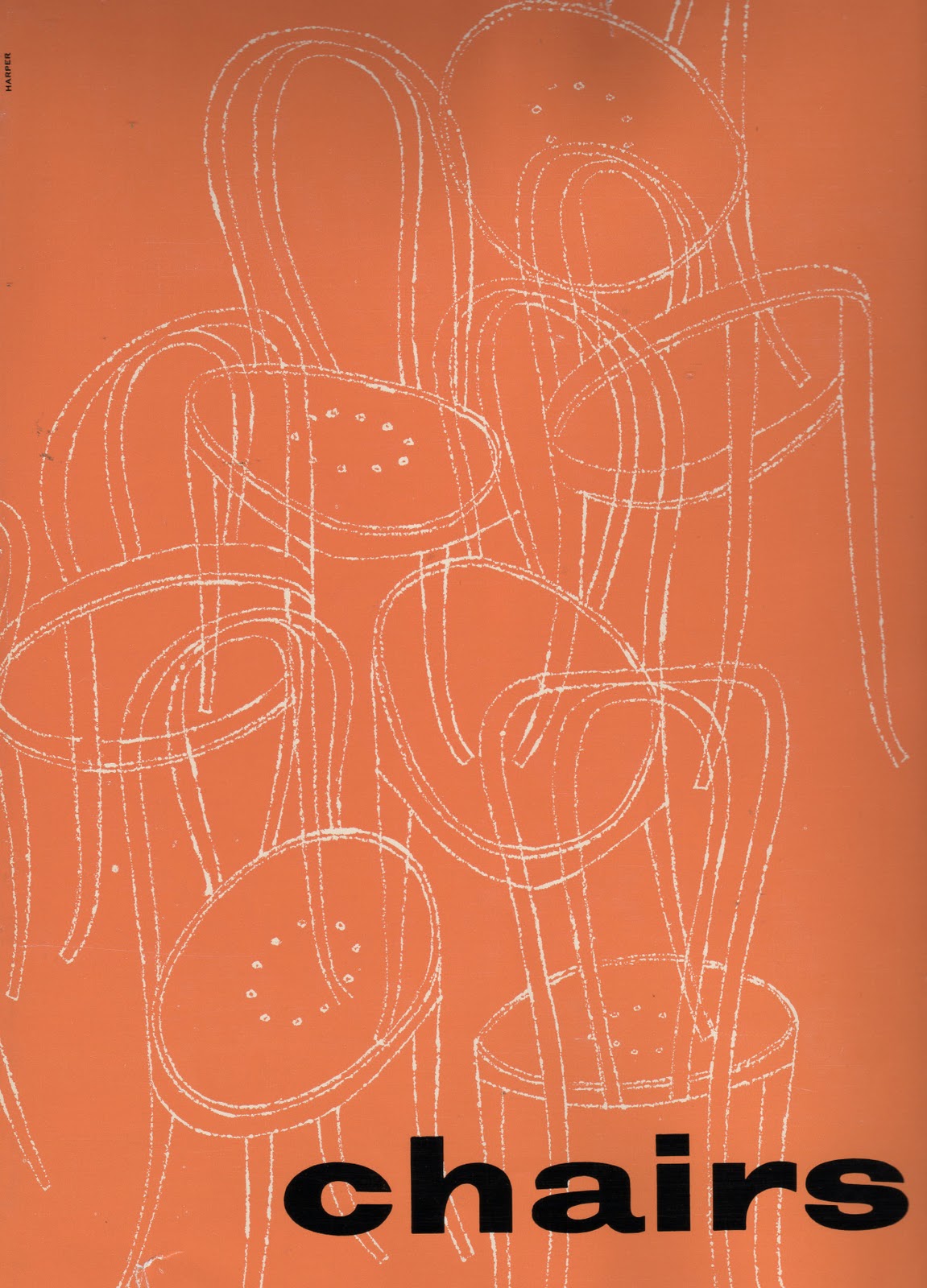
Always fond of chairs, and this book, Chairs.  Edited by George Nelson. Published by Whitney Publications, copyright 1953. We had a bunch of second-hand bentwood chairs in the basement. I loved the arches and circles, the smooth, dark wood. These chairs provided the seating for Blue Bird meetings and birthday parties along the converted shuffleboard table.

I twirled on a stool at the Highland Park Pharmacy Soda Fountain (since 1912) for an early lunch -- Grilled ham and cheese on white with mayo, no lettuce, a bag of chips, and a root beer, $8.19.  Old fashioned experience at 2011 prices about the same as Corner Bakery's.  Plus I can like it on FaceBook.  Dad would have ordered the goose liver sandwich and Mom the pimento cheese.  Then they would have traded halves.

Stickley probably didn't host shuffleboard evenings or Blue Bird meetings.  I headed downtown to renew my Dallas Museum of Art membership and see the Gustav Stickley exhibit.  The furniture pieces on display dated from 1901-1913.  They might have inspired the pieces in Grandma's house in Pierce.  Certainly the dark wood, green walls, and Craftsman aesthetic had trickled down to northeast Nebraska before the first World War.  I wished my Ohio friend Mary could have joined me, as she is a student of the American Arts and Crafts movement. 

Far more fun than Stickley was the DMA's installation in the Center for Creative Connections.  The current exhibit is great fun for kids, families, and art teachers. "Sculpting Space: 299 Chairs" is a fantastic installation created by students from DISD's Skyline High School Architecture Cluster using standard-issue fourteen-inch classroom chairs.


Just finished watching a strange artifact of American movie history. "Neptune's Daughter" starred swimming sensation Esther Williams, Ricardo Montalban, and Red Skelton. These chair formations could become synchronized swimming routines!


This one reminds me of a student I taught many years ago.  He couldn't pronounce his "L" sound. Yes, this yooks yike a yunar yander!
 
© 2011 Nancy L. Ruder

12/17/10

Reading cookbook reviews

Reading the Booklist and Library Journal cookbook reviews with greater interest lately.  After my effort writing a compendium of kitchen disasters for my sons, I'm interested in the idea of cookbooks as social history.  This find dates from 1922, before my father was born.  It was his mother's:


  Hot button topics include arranging a butler's pantry, and whether finger bowls are needed when fruit is served at breakfast.

Dad's mother knew to put a spoonful of duck fat in the holiday sauerkraut to make it shine.  Williams Sonoma's catalog offers gourmet duck fat for the discerning shopper.  I feel vindicated, empowered.  Across generations duck fat will prevail! 

The world's population can be divided into two groups--those who appreciate the culinary contributions of duck fat and those who do not.  Just before serving, a tablespoon of duck fat is added and a little sprinkling of flour to give the kraut a nice shine.

The first Christmas we were married, my spouse announced having a jar of duck fat in the refrigerator was disgusting, and he was not going to allow it. If I’d shot him then, I’d be out of prison now, but I wouldn’t have three wonderful sons who have learned to enjoy sauerkraut with roast turkey or pork roast. Should they need advice on arranging their butler's pantry, I'll be prepared.

© 2010 Nancy L. Ruder

10/15/10

Letter sweater


Perhaps they award letters for selling and clearing out parent's houses in the cosmic high school with our "permanent records".  I don't want to wear an itchy wool sweater, but I would like a letter.  I haven't been able to think, let alone blog, about any other issue for a very long time.

I couldn't resist claiming possession of my Dad's sweater letter for penmanship when we found the high school mementos from the Pierce High School graduating class of 1941.  I know Dad lettered in basketball and glee club.  We found three major sweater "P"s.  This one had the Palmer Method penmanship firmly affixed.  Was it really possible to letter in penmanship?


© 2010 Nancy L. Ruder

8/17/10

Breakfast for my neighbors


I fell asleep on the couch early last evening, during Anthony Bourdain's "No Reservations" trip to Liberia. I meant to watch his new trip to Rome, but I was a drowsy travel companion. That meant I was ready to catch the early bird's worm.

The sun was just sneaking down to the creek between the condo buildings when I started the second half of my loop. That's the slow half for photos and activating the senses.

Maybe I looked hungry, because a squirrel on the ground grabbed half an osage orange fruit in its mouth and ran up a tree. That's the equivalent of you or I grabbing a bed pillow in our mouth and running.

Half an osage orange is the size of a large toasted sesame bagel from Einstein Brothers with tomato/basil cream cheese. Maybe I was hungry. Or the fruit is the same size as a small grapefruit if you are dieting.

My dad called Osage oranges "horse-apples". We used to see them near Willow Creek in Pierce, Nebraska, when he took us wading. My dad didn't think horses really ate them.


The strange yellow-green globes were more common when we lived along a creek in Edmond, Oklahoma. I tried to cut one open, and ended up with a rubbery, caulky substance difficult to remove from my kitchen knife. That must have been in early summer, as the fruits come apart more easily this time of year.

Each time I walk along my North Texas creek I find signs that animals are eating the osage oranges. Some animals must pick them apart while they are still on the tree. Little bits of yellow come floating down. Others wait to nibble the fallen fruit.


My Visual Reference Guides : Trees book by Colin Ridsdale has proven again to be fairly useless beyond the pretty pictures. It states osage orange fruits, or "syncarps" can be 14 inches in diameter! A men's regulation basketball is 9.39 inches in diameter. Syncarp is correct. That's an aggregate or multiple fruit like a blackberry or pineapple. The yellow bits falling down look like pineapple snow. They would be the "drupes", the individual fruits packed tightly together in the syncarp.


In the early morning light the fruit bits look more green. And the glare I got from another squirrel when I stopped to photograph this one was pretty mean. Believe me, I didn't want his breakfast.

The squirrel didn't feel safe returning to nibble on the ground. As soon as I reached an acceptable distance, the squirrel raced to the nearest fruit like a football player trying to recover a fumble. It grabbed the fruit in its mouth and raced up the tree.


Osage orange trees have several other names:


  • Bois'd'arc, pronounced bodark.
  • Hedge-apple, more accurate than horse-apple, as the trees were used to make hedges on the prairie.
  • Bow-wood refers to Native Americans use of the wood for making bows.
  • Maclura pomifera
  • From now on I will call it the Squirrel Bagel tree.

According to Wikipedia, squirrels only tear the fruit apart to get the seeds. Also, the fruits are not poisonous to humans but would cause vomiting. And, interestingly, the fruits float. We can test that last bit of information in preschool next week.

As usual the Tree Notes blog has intriguing information on the subject of osage orange trees. The tree provides a very good firewood.

My breakfast was hashbrowns with fresh cilantro, mild salsa, a fried egg, corn tortillas with a black beans and pepper jack cheese, avocado, Greek yogurt, coffee, and orange juice. Don't tell the squirrel.

Have a lovely day, and eat more breakfasts.

© 2010 Nancy L. Ruder

7/24/10

Please help name this color


Teal blue. What is it? Please help a confused art teacher who can't name a color!

There's a blue dragonfly taunting me on the patio. A lapis blue dragonfly, and quite pleased with itself. He's way too cool to be named.


The tag on my MOG dress names its color "Pacific". That's not a meaningful color name when I describe my problem to the fabric store clerk. She is very helpful, but her understanding of "teal" is "peacock" to me. It's deja vu all over again, Yogi Berra famously said, although he wasn't altering a full-length gown with a sparkly jacket at the time.

When my great-aunt Emma died in 1974, she left written instructions that she wanted to wear her "teal blue dress" to the open casket funeral. Family members weighed in about "teal" as we searched Em's closets. Nothing fit our collective concept of "teal". Emma was dressed in a dark, vaguely blue dress. I wonder if she has been annoyed ever since at our failure to conform to her color specifications. It would be the pits to lie a-mouldering in the grave in the wrong outfit.

Sorry. That is disrespectful of the deceased. Trouble is, I'm still confused about blue vocabulary approaching a far happier event.


© 2010 Nancy L. Ruder

6/13/10

Saying good-bye to an old friend

Right up until the second I became a mother-in-law last fall, I considered myself a non-weeper. Since that sunny Colorado I-Do moment, I've turned into a sentimental old lady. Beyond turning into my mother, I've turned into my grandma.

I see Halma clearly, standing on her little kitchen porch beside the white lattice covered in orange trumpet vine flowers. Although backed by the vivid blue summer sky, Grandma is in Kodak black and white. My memories come through my Brownie Starmite view-finder. Halma is crying and waving while wiping her tears with her apron as we pull out of her yard in our pea green '54 Chevy. I wonder how my dad stayed dry-eyed at those departures.

Just guessing we stay casual until the realization creeps in that this could be the final leave-taking. Or maybe not this one, or the next one, but middle age proves there will one day be a last.

This week I got misty just spying a trumpet vine blooming on a fence. Last week I cried half-way to York after leaving my father. He can't wave from the front step anymore, and each leave-taking is closer to the last.

Today my sons and I say our good-byes to Wally, our old family friend. This reptilian character of paper and cloth over a coat hanger framework has been part of our home and family for thirteen years, hanging above the condo stairway ever since he crawled out of the storm sewer.


Wally attended many Lunch Bunch gatherings. He made special appearances at the library and schools. Wally even attended a summer camp, earning an honorarium for his guest appearance.

Wally suffered along with my youngest son through my early opera fascination, listening to "Carmen" and "Don Giovanni" until he considered biting the leg of his creator. Wally wore Santa hats and clutched roses in his teeth. He lost several teeth over the years.


Nothing made Wally as happy as shocking a repairman arriving [finally!] to fix the a/c or disposal. The later the arrival, the scarier face Wally wore.

We knew the truth. Wally had a heart of gold. Unfortunately, he accumulated a body full of spiders and spider eggs. My sons each granted permission for Wally to leave, heading toward the dumpster. I'm teary while taking a last few photos of our friend crawling out the door.


© 2010 Nancy L. Ruder

4/20/10

Math man

My dad is turning eighty-seven this weekend. It's sad. He can't do the math to figure out his age. He only vaguely remembers that my mother was five and a half years younger. Our shared birthday once added to our deep emotional connection. Now we just "check in" daily if Dad can hold the phone right-side-up.

This is the man who taught me to do square roots to pass the time on long car trips in the '54 Chevy with no air-conditioning. We practiced whistling, too, and reading maps. Way before the energy crunch, Dad helped me understand miles per gallon. He taught me to draw floorplans, and to delight in the pristine beauty of a multiplication table written on graph paper. Our after supper strolls around Pierce, Nebraska, made it easier to comprehend story problems about people living in the white house with the pet giraffe.

Eighty-seven is not a prime numer.

© 2010 Nancy L. Ruder

4/11/10

Anoles of the King


Watching the spring lizards appear on my condo fence to show off their rosy neck flaps, I kept hearing my internal narrator announce, "Annals of the King by Alfred, Lord Tennyson".


Yes, I played the Whitman card game of Authors with my younger siblings, crouched under the high brass bedframe in the "pink bedroom" at Grandma's house. I can see her chenille bedspread hanging down all around our hiding place.

Alas, Alfred, Lord did not write "Annals of the King", or even "Anoles of the King". Tennyson wrote something called "Idylls of the King". To collect all the Tennysons in the game of Authors you had to get:


  • The Brook

  • The Crossing

  • The Charge of the Light Brigade

  • Idylls of the King

I'm pretty sure Tennyson's work had something to do with King Arthur, but my education never filled in the blanks. Everything I know about the Light Brigade's charge in the Crimean War comes from George MacDonald Fraser's Flashman novels. No patio lizards in those, but plenty of reptilian characters...


Doing the NY Times crossword puzzle this morning, I knew that Thackery was born in Calcutta. "My head is full of such trivia", I told Alfred, Lord, as I sent his card into my scanner.


Next time:


Louisa May Alcott's Little Anoles--(small lizard sisters eating apples in the attic).


Robert Louis Stevenson's A Condo Patio of Verses


© 2010 Nancy L. Ruder

4/10/10

Chicken cups and songs

Listening to the students practice their chicken songs for the music festival, I remembered that Dad's chicky cup and cereal bowl were now high up in a kitchen cabinet.

The "chicky bowl" has lost much of its decoration due to generations of spoon scrapes. The "chicky cup" has a small crack, but the exterior images are clear. Filled with daisies, the cup would make a good still life for the elementary art students to use for a quiet line drawing.

The cup and bowl date to my dad's childhood in Pierce, Nebraska in the 1920s. There are no markings on the undersides to indicate origin. The baby chick images matched perfectly with the collection of nursery story books on the bottom shelf in Grandma's living room. I wish I had those little softcover books of the Billy Goats Gruff and Little Red Hen. It was a special event to eat from the bowl and cup on a weekend visit to Pierce when I was a child.

The children are singing a song called "Chook, Chook". It goes like this:

Chook chook
Chook chook
Good morning, Mrs. Hen.
How many chickens have you got?
Madam, I have ten,
Four of them are yellow,
And four of them are brown,
And two of them are speckled red,
The nicest in the town.

I don't remember that from my childhood nursery rhymes, but I did know two versions on another song:


Ever since Gene Hardy's "Childrens Literature" class in the UNL English Department in the mid-Seventies, I've been alternately annoyed and intrigued by those deep, hidden meanings in nursery tales. Is this Hickety Pickety rhyme an easy one for skipping, singing kids just learning to read with simple phonics? Or is it about racism and prostitution?

I'm teaching children who don't know that milk comes from cows, eggs come from chickens, and veggies grow in dirt. Did you know applesauce doesn't begin in handy three-pack individual servings?

I hope to post some of the elementary students' line drawings of daisies in Dad's old breakfast cup soon. The children liked hearing the history behind the cup.

© 2010 Nancy L. Ruder

LinkWithin

Related Posts Plugin for WordPress, Blogger...